 For a while there it felt like brioche was one of those culinary buzzwords that you couldn’t get away from. Brioche burger buns, brioche French Toast, brioche croutons- while none of them are bad ideas (unless you consult your cardiologist), sometimes it felt like restaurants with heavy-handed inclusion of brioche on the menu might be covering up a lack of creativity or desire to cater to the “more decadence is better” crowd. Nevertheless, brioche is a good shorthand for “we’re not fucking around with health food around here.”

Reinhart includes 3 basic brioche formulas– Rich Man’s Brioche, Middle-Class Brioche, and Poor Man’s Brioche. Did you know that Marie Antoinette’s famous (and probably wrongly-attributed) reaction to the plight of the French poor was actually “Let them eat brioche”? Quite befitting of a French queen’s table, the Rich Man’s brioche contains an unreal 70% butter to flour ratio, which sounds practically like a pie crust baked into a loaf.
Bread for the Bourgeois
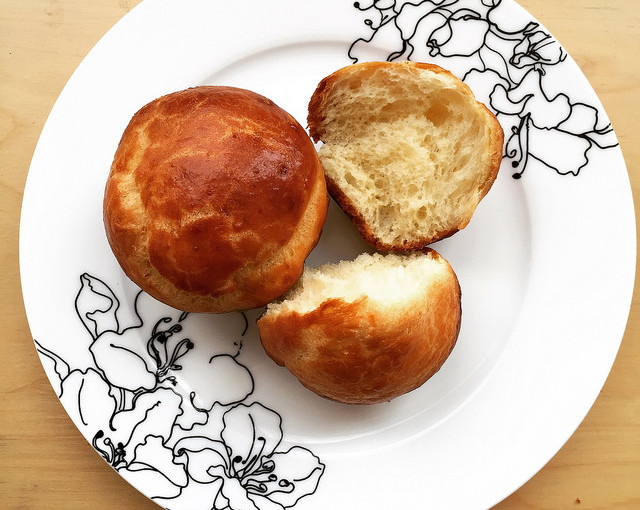
I went with the Middle-Class recipe, which requires a relatively measly 50% butter. As if a full stick of butter wasn’t enough enrichment, I also added 3 eggs and a bit of milk (whole, of course). Because it’s so fat-laden, this dough didn’t require as much intensive kneading as leaner breads (yay!). It was, however, incredibly fickle in the face of any amount of heat.
 The consistency was almost to the point of being a really thick pancake batter rather than a dough. As such, the dough requires a deep chilling before shaping. I spread it out on my trusty SilPat and stuck it in the fridge for about 4 hours before taking it out for a quick shaping into boules. It was nearly impossible to shape well, so I just rolled it into neat balls and hoped that was sufficient shaping. And here’s where I messed up — I read the instructions incorrectly and stuck the dough BACK in the fridge for a few hours to chill it up again, where I should have left it out to proof and go right into the oven. Gah.
Mistakes are Fixable!
Luckily, when I realized this 2 hours later, I pulled my dough out to proof for 2 hours. It didn’t rise as vigorously as a French loaf would have, but it still expanded a bit. When it hit the hot oven, though, my little boules grew substantially. Yay! Success after all.
 As enticing as hot-out-of-the-oven brioche sounds, I found that the petites tasted better the next morning — a little less of a face-punching butter taste and more of a rich, balanced bread taste. You don’t really need to put anything on this bread, especially not butter– although something like jam or apple butter would probably cut the richness of the bread nicely.
Flavor Intensifies: What I’d Add Next Time

I’d love to try this another time with something mixed into the dough. Maybe a brown butter brioche for extra nuttiness, or a bit of orange extract in the butter to give it a bit more complexity? Chocolate swirl, caramel, or bacon bits would also be pretty awesome, but wouldn’t do anything to help the hearty-healthiness of brioche. But if you’re eating brioche, maybe you should accept the fact that your diet has been déraillé.
Next time I’ll be making a cousin of brioche, the Casatiello, which is like brioche but has cheese and meat baked in!
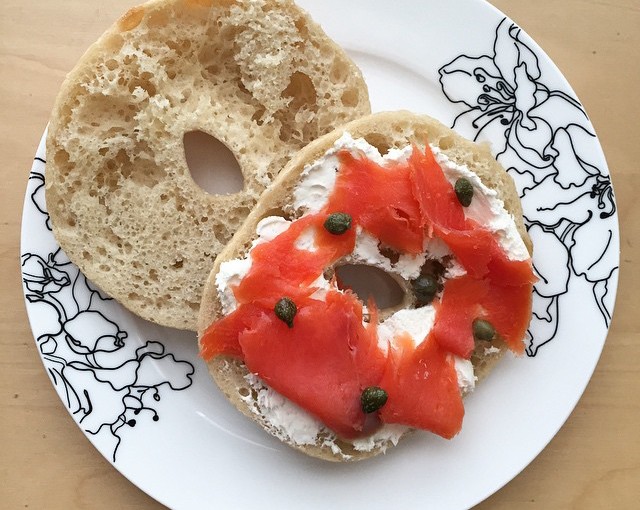


 The idea of intentionally putting dough in water is kind of weird to me. Boiling water seems so violent, and bread dough can be such a delicate substance. In the end, I find it easier to think of bagels as weird giant noodles during the boiling stage. In fact, the method used here actually has a lot in common with another favorite carb of mine: ramen. As with


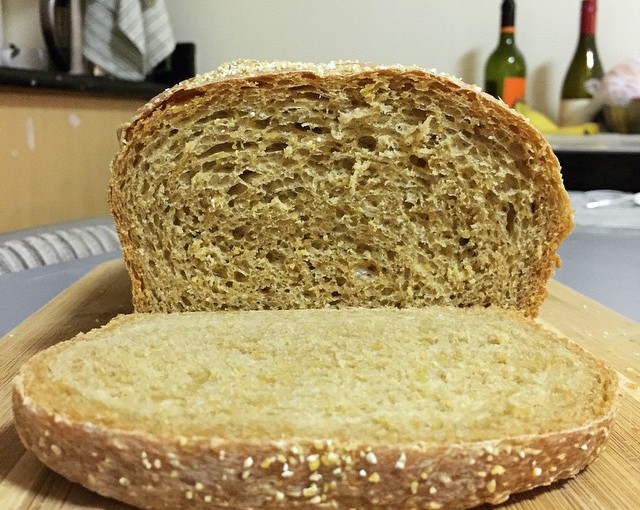

 Corn was also the bassline of my bread this week, the first alphabetically in The Bread Baker’s Apprentice. When I was a kid we used to go to the farmers’ market to buy loaves of “squaw bread,” which was dark and sweet and grainy and delicious by itself and for a sandwich. Anadama reminds me a lot of that bread — it’s lightly sweet, with a texture that just screams “please spread something on me!” …In the most PG way possible. The sweetness of the bread comes from an overnight cornmeal “soaker” and a few tablespoons of molasses, a fun ingredient that looks super cool as it rolls down the mini mountains of flour in a bowl.